Floating Vertical Bar With Share Buttons widget
Showing posts with label Nature. Show all posts

Greenland vs Iceland

greenland and iceland name difference
Why is it that Greenland isn’t called Iceland and vice versa? After all, we know that Greenland is nearly entirely covered in ice and Iceland, well, isn’t!

Iceland had a few other names throughout history, including “Snæland” (snowland) and Garðarshólmur ("Garðar's little island"). Iceland current name came from a Norwegian Viking called Flóki Vilgerðarson. He chose the name after seeing a distant fjord full of sea-ice from a mountain. He didn’t think very much of Iceland, and that may be why he chose this uninviting name. You sometimes hear the story that Iceland was so named to discourage excessive immigration, but there seems to be no basis for this claim as thousands of people did in fact immigrate from Norway.

Greenland is said to have gotten its name from the Viking Erik the Red. After being banished from Norway and then Iceland, he settled in what is now Greenland. When his term of banishment expired, he returned to Icleand to invite his neighbors and friends to settle the new country with him. He purposely chose the pleasant name Grænland ("green land") to attract settlers, and he wasn’t really lying. Some parts of Greenland, especially where they settled, really are green, as these pictures from the tourist board attest (www.greenland-guide.dk/outdoor_life_photo.htm).

Mystery solved!

Clouded Leapard

Clouded leopard

The clouded leopard is a felid found from the Himalayan foothills through mainland Southeast Asia into China, and has been classified as vulnerable in 2008 by IUCN.
Its total population size is suspected to be fewer than 10,000 mature individuals, with a decreasing population trend and no single population numbering more than 1,000 adults !

World’s smallest deer

world smallest dear

The Pudu: World’s smallest deer. They live in bamboo thickets to hide from predators, and can weigh up to 12 kilograms (26 pounds).

Waxy Monkey Leaf Frog


Its Phyllomedusa sauvagii, commonly known as the Waxy Monkey Leaf Frog.

They belonging to the subfamily of South and Central American leaf frogs that inhabits the Chaco (dry prairie) of Argentina, Brazil, Bolivia and Paraguay.
Males and females range from about 2 to 3 inches in length, with the females usually about 25% larger than males. They move by walking rather than hopping, which is the reason for the “monkey” in their name.

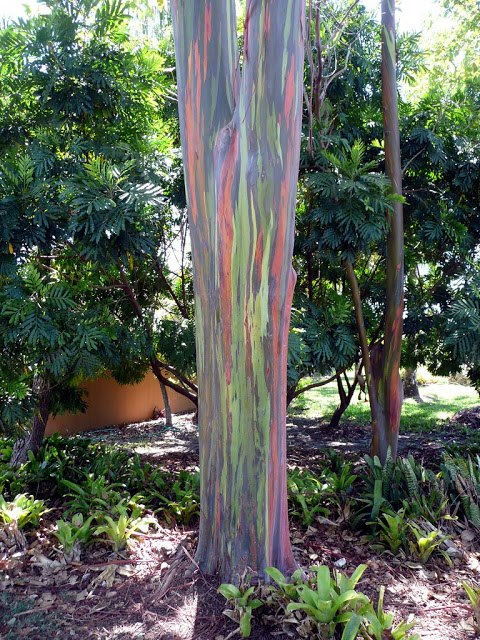
Eucalyptus deglupta


Eucalyptus deglupta is a tall tree, commonly known as the Rainbow Eucalyptus, the Mindanao Gum, or the Rainbow Gum. It is the only Eucalyptus species found naturally in the Northern Hemisphere. Its natural distribution spans New Britain, New Guinea, Ceram, Sulawesi and Mindanao.

In the pulpwood plantations of the Philippines it is the most common tree used for the production of pulpwood. It is a huge evergreen and can grow up to seventy five meters tall. The unique multi-hued bark is the most distinctive feature of the tree. Patches of outer bark are shed annually at different times, showing a bright green inner bark. This then darkens and matures to give blue, purple, orange and then maroon tones.

Cuban tree frog


An amazing photography of a Cuban tree frog.... The photo was taken when the frog swallowed a tiny ornamental electric bulb.. But the bulb was still lighting inside its little tummy...

© National geographic

The Reed Flute Cave


The Reed Flute Cave is a landmark and tourist attraction in Guilin, Guangxi, China It is a natural limestone cave with multicolored lighting and has been one of Guilin’s most interesting attractions for over 1200 years. It is over 180 million years old. The cave got its name from the type of reed growing outside, which can be made into melodious flutes. Reed Flute Cave is filled with a large number of stalactites, stalagmites and rock formations in weird and wonderful shapes. Inside, there are more than 70 inscriptions written in ink, which can be dated back as far as 792 AD in the Tang Dynasty. These aged inscriptions tell us that it has been an attraction in Guilin since ancient times. It was rediscovered in the 1940s by a group of refugees fleeing the Japanese troops.

The mimic octopus


The mimic octopus is an intelligent shape changer that can impersonate a host of other animals to dodge hungry predators.
Living in the tropical seas of Southeast Asia, it was not discovered officially until 1998, off the coast of Sulawesi. Recently found in the great barrier reef in Northern Queensland in 2010. The octopus mimics the physical likeness and movements of more than 15 different species, including sea snakes, lionfish, flatfish, brittle stars, giant crabs, sea shells, stingrays, flounders, jellyfish, sea anemones, and mantis shrimp. It accomplishes this by contorting its body and arms, and changing color.
Although all octopuses can change color and texture, and many can blend with the sea floor, appearing as rocks, the mimic octopus is the first octopus species ever observed to impersonate other animals.

Rainbow parrots


The Rainbow Lorikeet,is a species of Australasian parrot found in Australia, eastern Indonesia (Maluku and Western New Guinea), Papua New Guinea, New Caledonia, Solomon Islands and Vanuatu. In Australia, it is common along the eastern seaboard, from Queensland to South Australia and northwest Tasmania. Its habitat is rainforest, coastal bush and woodland areas. Several taxa traditionally listed as subspecies of the Rainbow Lorikeet are increasingly treated as separate species

one of the largest volcanoes in Iceland near eruption.


Katla is one of the largest volcanoes in Iceland. Its peak reaches 1,512 metres (4,961 ft)
The caldera of the Katla volcano has a diameter of 10 km (6 mi) and is covered with 200–700 metres (660-2,300 ft) of ice. The volcano normally erupts every 40–80 years. It has not erupted violently for 95 years. Its present dormancy is among the longest in known history. Katla has been showing signs of unrest since 1999, and geologists have concerns that it might erupt in the near future

Hot lips, Psychotria Elata | Amazing Flower!


Something quite interesting....Hot lips, Psychotria Elata | Amazing Flower!
Affectionately known as Hot lips, Psychotria elata with it’s colorful red flowers attracts many pollinators including butterflies and hummingbirds. One of the host plants for the golden silkmoth (Xlophanes adalia). Also known in some circles as Mick Jagger’s lips. Native to Tropical America, this specimen was found at the Butterfly Gardens in Manuel Antonio, Costa Rica.

CAVERNAS DE MÁRMOL OF GENERAL CARRERA, CHILE

CAVERNAS DE MÁRMOL OF GENERAL CARRERA, CHILE

These marble caves are found in Patagonia, Chile in the second largest freshwater lake in South America. The lake has an area of 1850 km²; 970 km² are in the Chilean Aisén Region, and 880 km² in the Argentine Santa Cruz Province, making it the biggest lake in Chile, and the fourth largest in Argentina. The lake has a maximum depth of 586 metres, and is fed by rivers coming from several glaciers of the Patagonian Andes. Marble Cave is located approximately in the middle of the lake, on the Chilean side.

The blue colour of General Carrera Lake is due to small particles carried by the ice in the glaciers, which remain suspended in the water once the ice melts. The glacial meltwater is slightly turbid and refracts the blue part of sunlight.

The caves are made entirely of marble: marble forms when limestone or dolomite is metamorphosed. The whole block of marble has been calculated as weighing 5 billion tons; the stone is light grey in colour with some darker striations. The marble was exposed by the movements of glaciers during the Pleistocene. The caves were formed from wave action over 6,200 years, as water penetrated the huge blocks of rock and carved them in such a way that they formed beautiful caves and tunnels.

Marble, being made of calcium carbonate, is slightly soluble in water. When the lake reached its present level, the process of solution started. The marble began to dissolve, and it dissolved faster at the water surface. Small cracks within the marble were gradually worn into wider fractures; waves washed away the dissolved material. It took only a few thousand years to create these caves and tunnels.

MEADOW OF FROST 'FLOWERS' IN THE OCEAN

A MEADOW OF FROST 'FLOWERS' IN THE OCEAN 


Graduate student Jeff Bowman first saw these ‘flowers’ between 3 and 4am from the deck of a ship returning from the North Pole. The temperature had just dropped and when dawn broke he was able to see them much more clearly and for much farther. They appeared to be growing in the cold and dry air all across the surface of the water. He was told they were frost flowers.

Frost flowers are like ice sculptures and they grow on the border between the sea and air. Bowman’s colleague Matthias Wietz took this image on September 2, 2009 when the air was extremely cold and dry; colder than the surface of the ocean. When the conditions in the air are that different from that of the sea, the dryness in the air ‘pulls’ moisture from bumps in the ice which then vaporises. The air gets humid for a little while and the cold makes the water vapour heavy. As the air needs to release the excess weight, the air turns the vapour back into ice, crystal by crystal, creating ‘frost flowers’ up to 7 centimetres high.

The ‘flowers’ themselves suck up seawater and concentrate the salt within; they contain three times the salinity of the ocean. Bowman and his colleagues took a frozen flower and let it melt. Only one to two millilitres of water resulted, though each frost flower hosted about one million bacteria.

As the poles warm, there may be more and more of these frost flower meadows as there will be more open sea turning to thin ice in winter.

sea lava


This photo, taken by nature photographer CJ Kale, is of lava hitting the surf off of the main island of Hawaii. The water was filled with volcanic glass and lava bombs; the water vapor is the result of the lava superheating the seawater and evaporating it. Lava cools rapidly when it hits seawater, causing minerals to form and crystallize quickly.

Catatumbo lightning

Catatumbo lightning


Still a relatively mysterious occurrence, the Catatumbo lighting in Venezuela is known as the everlasting storm. The seemingly non-stop cloud-to-cloud lightning can be easily seen from a distance, and has long been celebrated for its ability to assist sailors with navigation. 

Since the Catatumbo lighting does its thing approximately 140-160 nights per year, your chances of viewing it are quite good. It occurs very specifically in one area -- the mouth of the Catatumbo River and around Maracaibo Lake.

Share

Twitter Delicious Facebook Digg Stumbleupon Favorites More